

Conditions we treat
A short note on each disease: what it is, its root cause as explained in the Ayurvedic classics, and the Panchakarma therapies we may advise. Ayurvedic names are in brackets.
🦴Spine & back
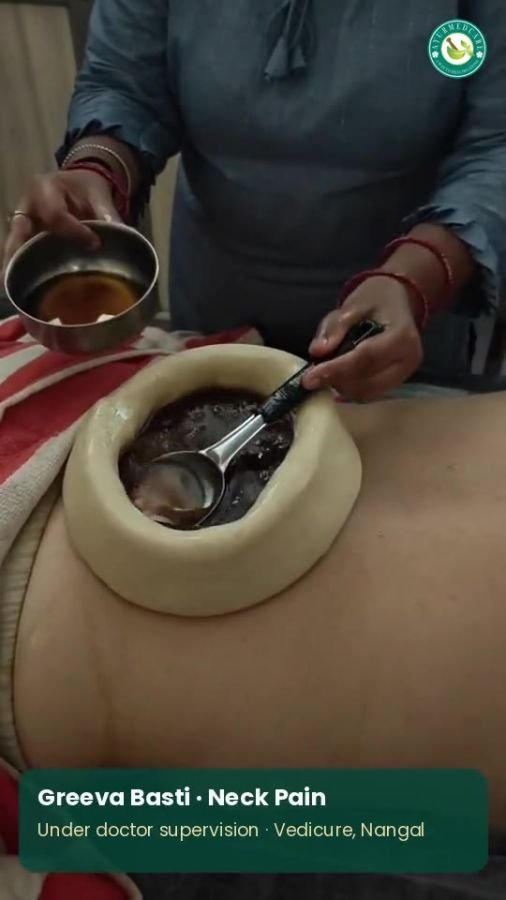
Cervical spondylosis
GreevagrahaWhat it is & root cause
A Vata disorder of the neck. With age the tissues (dhatu) wear out, and long hours of bending the neck, heavy loads, wrong sleeping posture and exposure to cold aggravate Vata, which settles in the neck joints. This gives pain, stiffness, giddiness and numbness or tingling in the arms.
Panchakarma we may advise
Cervical disc prolapse
Greevagata VataWhat it is & root cause
Vata aggravated in the neck presses on the channels going to the arm, so pain runs from the neck to the shoulder, arm and fingers (much like Vishwachi). Sudden jerks, lifting weights and degeneration are the usual triggers.
Panchakarma we may advise
Neck stiffness
GreevastambhaWhat it is & root cause
Stiffness of the neck where Vata is joined by Kapha and Ama (undigested toxins). Cold, damp exposure, sleeping in a wrong position or a sudden jerk set it off; the neck feels heavy and rigid.
Panchakarma we may advise
Low back pain
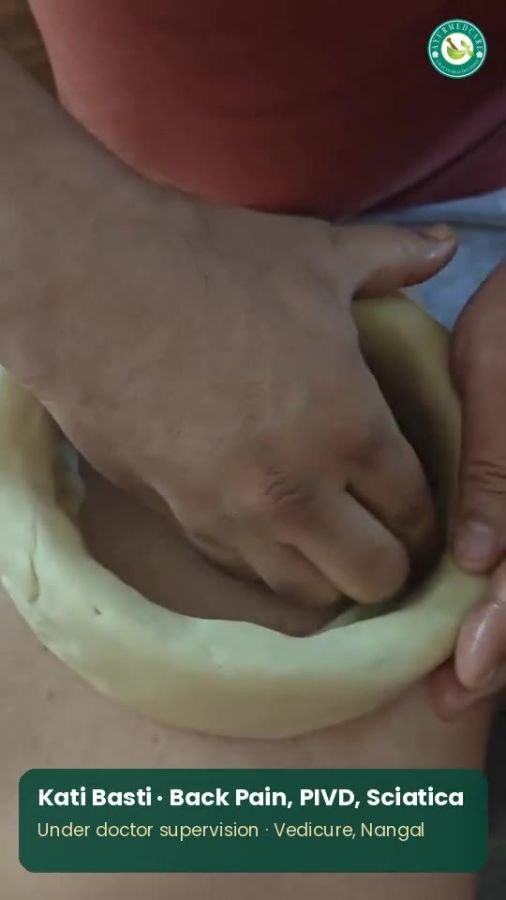
KatigrahaWhat it is & root cause
Vata lodging in the low back (Kati) causes pain and a “catch” in the back. Lifting heavy weights, jerks, long sitting or travel, dry and cold food, and holding back natural urges aggravate Vata. When Ama is present, there is also heaviness and morning stiffness.
Panchakarma we may advise
Sciatica
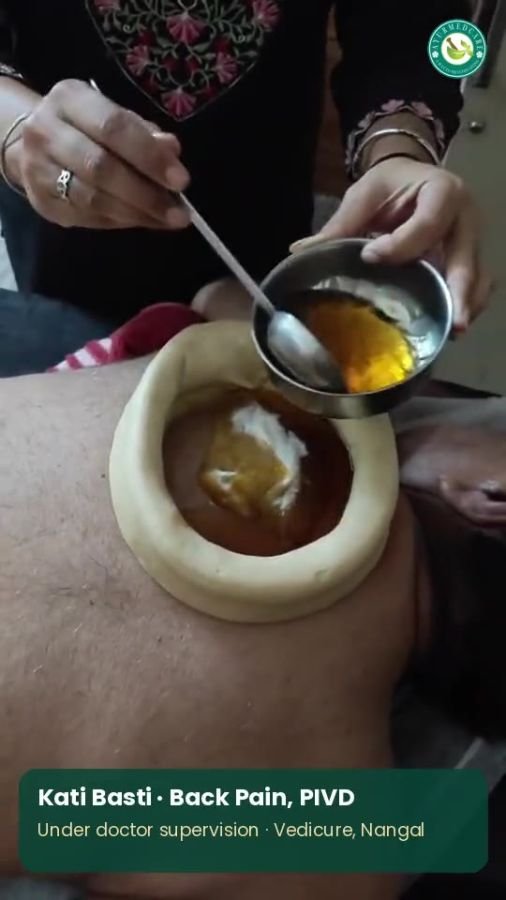
GridhrasiWhat it is & root cause
Charaka describes Gridhrasi as pain and stiffness that start in the buttock and run down the back of the thigh, knee and calf to the foot, so the person walks with a limp. It is caused by Vata alone or Vata with Kapha. Charaka advises Basti, Siravedha (bloodletting at a specific point of the leg) and Agnikarma.
Panchakarma we may advise
Lumbar disc prolapse / IVDP
KatishoolaWhat it is & root cause
Degeneration of the spinal tissues, lifting with a bent back and sudden jerks aggravate Vata in the low back. The disc bulges and presses on nerves, giving back pain that may run into one or both legs.
Panchakarma we may advise
Spondylolisthesis
Trika-Kati grahaWhat it is & root cause
Slipping of one vertebra over another weakens the low back. In Ayurveda this is Vata with depletion of the supporting tissues, leading to pain and a catch in the sacral and lumbar region.
Panchakarma we may advise
Ankylosing spondylitis
What it is & root cause
A long-standing inflammatory stiffness of the spine. Ayurveda sees it as Vata combined with Ama, similar to Amavata: first the Ama is digested and cleared, then Vata is pacified and the spine is nourished.
Panchakarma we may advise
🦵Joints & muscles
Osteoarthritis
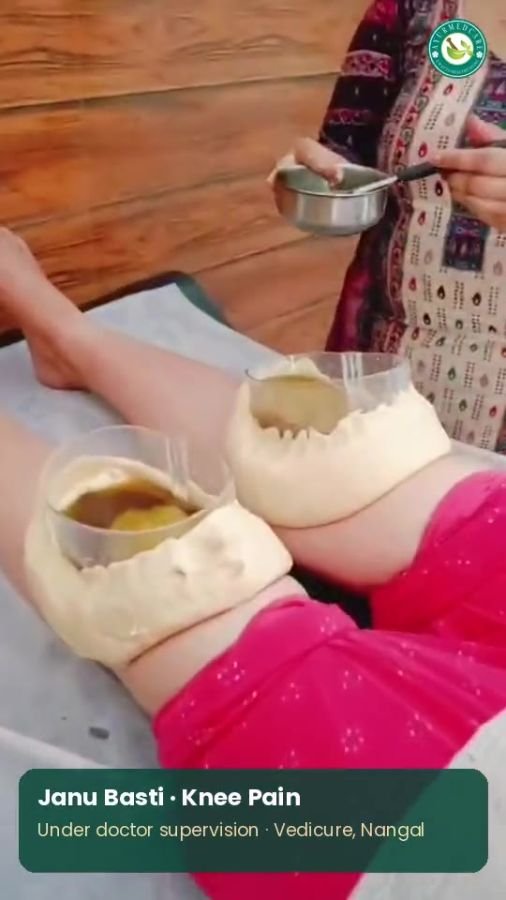
Sandhigata VataWhat it is & root cause
Charaka describes Vata lodged in the joints: the joint swells and feels like a bag filled with air, with pain on bending and stretching. Ageing, wear and tear, excess weight and dry, cold food deplete the joint and aggravate Vata.
Panchakarma we may advise
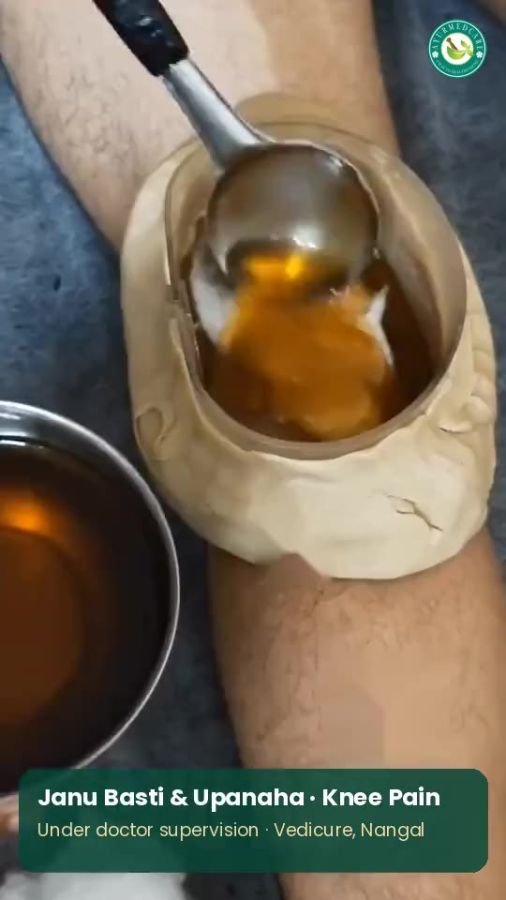
Knee joint effusion
KroshtukasheershaWhat it is & root cause
A large swelling of the knee, described in the classics as looking like the head of a jackal. It arises from Vata together with vitiated Rakta (blood), with severe pain.
Panchakarma we may advise
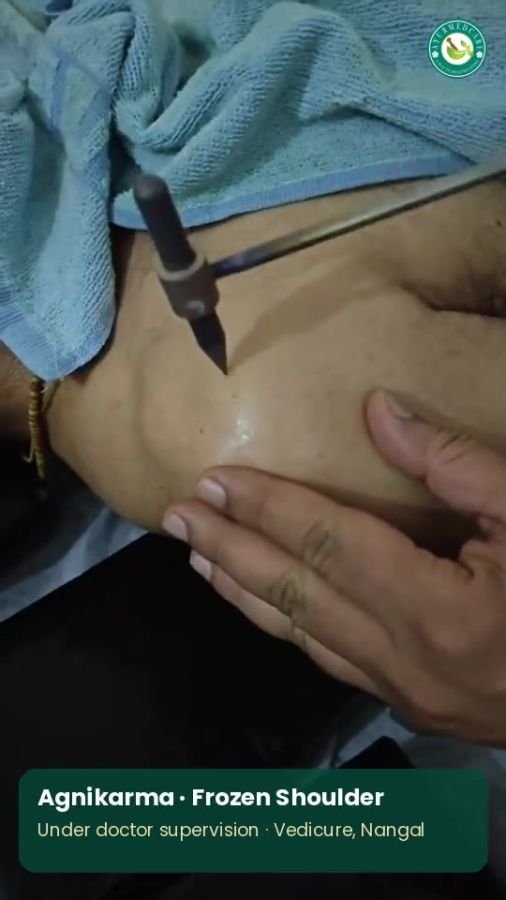
Frozen shoulder
ApabahukaWhat it is & root cause
Vata dries up the binding tissues of the shoulder (Amsa bandhana), so the arm cannot be lifted and movement becomes painful and restricted. Nasya is specially advised in the classics for Apabahuka.
Panchakarma we may advise
Brachial neuralgia
VishwachiWhat it is & root cause
Vata affects the tendons and nerves running from the back of the fingers to the arm, causing pain, numbness and loss of function of the arm.
Panchakarma we may advise
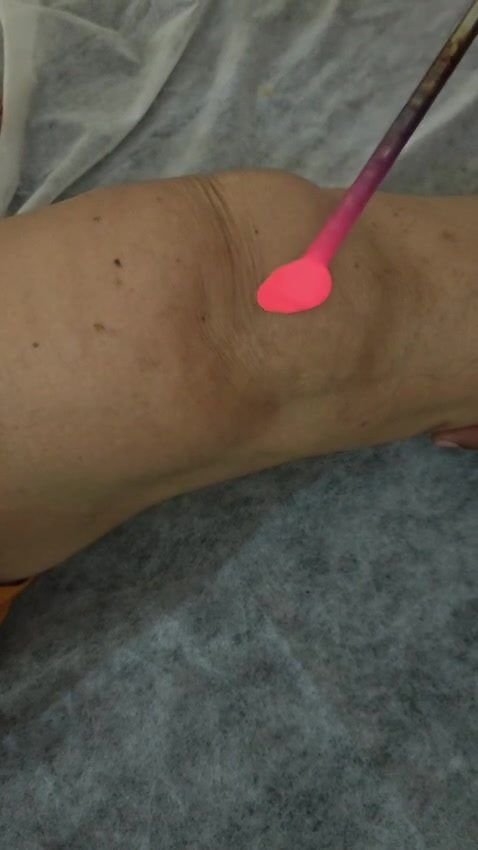
Tennis elbow
Kurpara ShoolaWhat it is & root cause
Local Vata in the elbow from repeated overuse of the forearm and wrist, giving pain on gripping and lifting.
Panchakarma we may advise
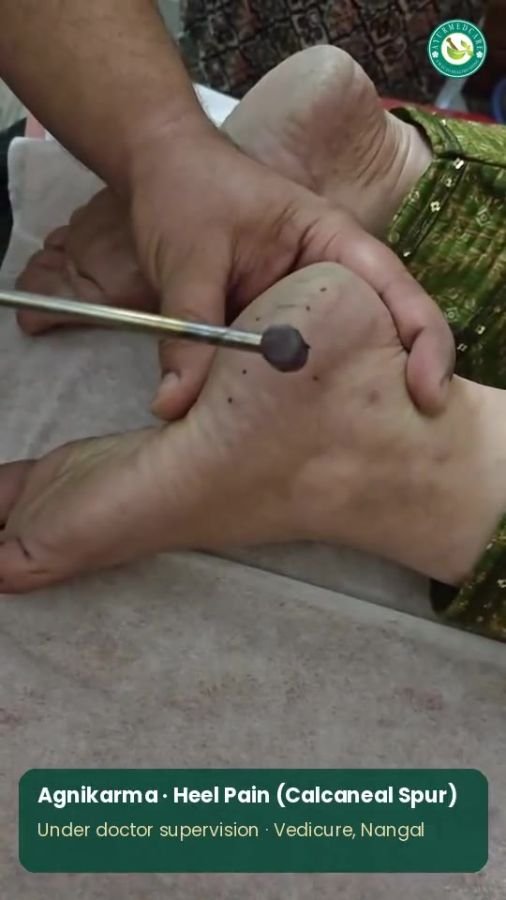
Heel pain / calcaneal spur
VatakantakaWhat it is & root cause
Sushruta describes Vatakantaka as pain in the heel that comes from walking on uneven ground or excessive walking, when Vata settles in the heel. Pain is worst with the first steps in the morning. Sushruta advises Agnikarma and bloodletting.
Panchakarma we may advise
Muscular dystrophy
MamsakshayaWhat it is & root cause
Wasting of muscle tissue (Mamsa dhatu) with Vata dominance. Treatment aims to nourish the tissues and slow down weakness.
Panchakarma we may advise
Fibromyalgia
Mamsagata VataWhat it is & root cause
Vata lodged in the muscles gives heaviness, stiffness and a pain “as if beaten”, with tiredness and poor sleep. Stress, overwork and irregular routine aggravate it.
Panchakarma we may advise
Stiffness after fracture / dislocation
Abhighataja VikaraWhat it is & root cause
After an injury (Abhighata) or fracture (Bhagna), Vata gets aggravated at the site, leaving pain, swelling and restricted movement even after the bone has healed.
Panchakarma we may advise
🛡️Auto-immune
Rheumatoid arthritis
AmavataWhat it is & root cause
Madhava Nidana explains that weak digestive fire, incompatible food, eating again before the last meal is digested, and lack of exercise form Ama (undigested toxins). Vata carries this Ama to the joints, giving pain, swelling, stiffness, heaviness and fever. Ama is cleared first; oil is avoided in the early stage.
Panchakarma we may advise
Gouty arthritis
VataraktaWhat it is & root cause
Charaka explains that excess salty, sour, pungent, alkaline, oily and hot food, anger, day sleep and night waking vitiate the blood (Rakta), while Vata is blocked. The disease starts in the small joints of the feet and hands with burning pain, swelling and redness. Charaka calls Basti the best treatment for Vatarakta.
Panchakarma we may advise
SLE (lupus)
VataraktaWhat it is & root cause
In the CGHS Ayurveda guidelines SLE is grouped under Vatarakta, where vitiated Rakta and Vata affect joints, skin and other organs. Panchakarma is planned according to strength, along with the patient’s physician.
Panchakarma we may advise
Psoriasis
Ekakushtha / KitibhaWhat it is & root cause
A type of Kushtha. Charaka describes Ekakushtha as a patch with no sweating, spreading over a large area, and scaly like the scales of a fish. Incompatible food (Viruddha ahara), suppressing the urge to vomit, heavy food, day sleep and stress vitiate the doshas, Rakta and skin. Charaka advises repeated cleansing (Shodhana) for Kushtha.
Panchakarma we may advise
Lichen planus
GajacharmaWhat it is & root cause
A type of Kushtha in which the skin becomes thick and rough like the hide of an elephant, mainly due to Vata and Kapha.
Panchakarma we may advise
Multiple sclerosis
Sarvanga VataWhat it is & root cause
Vata spreading through the whole body (Sarvanga Vata), often with obstruction of its pathways, leads to weakness, numbness and loss of coordination. Treatment aims to pacify Vata and nourish the nervous tissue.
Panchakarma we may advise
Vitiligo
ShvitraWhat it is & root cause
Charaka places Shvitra close to Kushtha, caused by incompatible food, disrespect towards teachers and elders, and wrong conduct, which vitiate the doshas and Rakta. Cleansing is done first, followed by local treatment.
Panchakarma we may advise
Thyroid disorders
What it is & root cause
There is no single classical name. Ayurveda understands them as a disturbance of the tissue-level digestive fire (Dhatvagni) and of Kapha and Meda (fat tissue), with Vata or Pitta depending on the type.
Panchakarma we may advise
🧠Brain & nerves
Paralysis / hemiplegia
PakshaghataWhat it is & root cause
Charaka explains that Vata takes over one half of the body and dries up its channels and nerves, causing loss of movement and sensation of that side. Charaka advises Sweda with Sneha (oil) and Virechana for Pakshaghata.
Panchakarma we may advise
Facial palsy
ArditaWhat it is & root cause
Vata affecting one side of the face. Classical causes include very loud speaking, chewing very hard food, excessive laughing or yawning, carrying heavy loads and sleeping in an awkward position. The face deviates to one side and the eye may not close.
Panchakarma we may advise
Parkinson’s disease
KampavataWhat it is & root cause
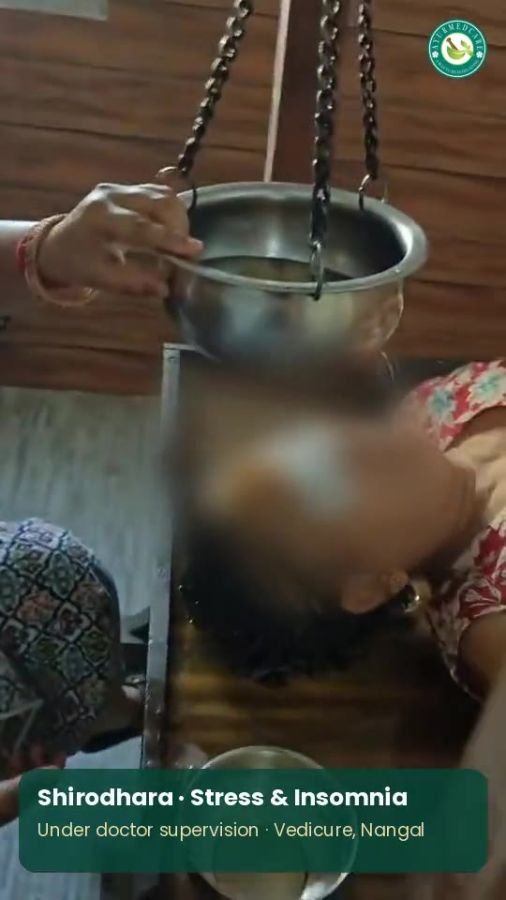
Aggravated Vata causes tremors (Kampa), stiffness, slowness of movement and difficulty in walking. Treatment aims to pacify Vata and nourish the nervous system.
Panchakarma we may advise
Cerebral palsy & diplegia
Sarvanga VataWhat it is & root cause
Vata affecting the whole body from birth or early life, with stiffness, weakness and delayed movement. Therapies are gentle and suited to the child’s age and strength.
Panchakarma we may advise
Motor neuron disease
Sarvanga VataWhat it is & root cause
Progressive weakness from Vata affecting the whole body. Panchakarma is supportive, aimed at strength and quality of life, along with the treating neurologist.
Panchakarma we may advise
Numbness / neuropathy
SuptiWhat it is & root cause
Numbness and tingling due to Vata with Kapha blocking the channels, with involvement of Rakta. Sushruta advises bloodletting and Lepa for numbness. Diabetes is a common cause today.
Panchakarma we may advise
Migraine
ArdhavabhedakaWhat it is & root cause
Charaka describes a piercing, cutting pain in one half of the head that comes back every few days. Dry food, overeating, eating before the previous meal is digested, cold wind and frost, overexertion and holding back natural urges aggravate Vata alone or Vata with Kapha.
Panchakarma we may advise
Chronic headache
ShirashoolaWhat it is & root cause
Charaka lists suppression of natural urges, day sleep, night waking, loud speaking, cold wind and frost, dust and smoke, harsh sun, crying, grief and heavy or sour food as causes of headache.
Panchakarma we may advise
Sinus headache
SuryavartaWhat it is & root cause
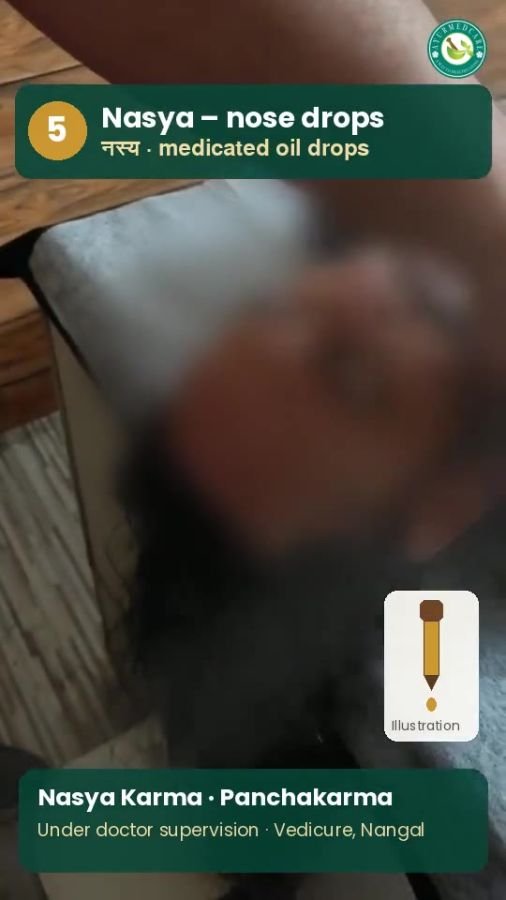
A headache that begins at sunrise, increases as the sun rises and settles by evening. It is caused by all three doshas, mainly Vata and Pitta, with blocked sinuses.
Panchakarma we may advise
Insomnia
AnidraWhat it is & root cause
Increased Vata and Pitta from stress, anxiety, overwork, fasting and old age disturb sleep. Charaka advises oil massage, oil on the head, and calming therapies for the eyes and head to bring natural sleep.
Panchakarma we may advise
✨Skin & hair
Eczema
VicharchikaWhat it is & root cause
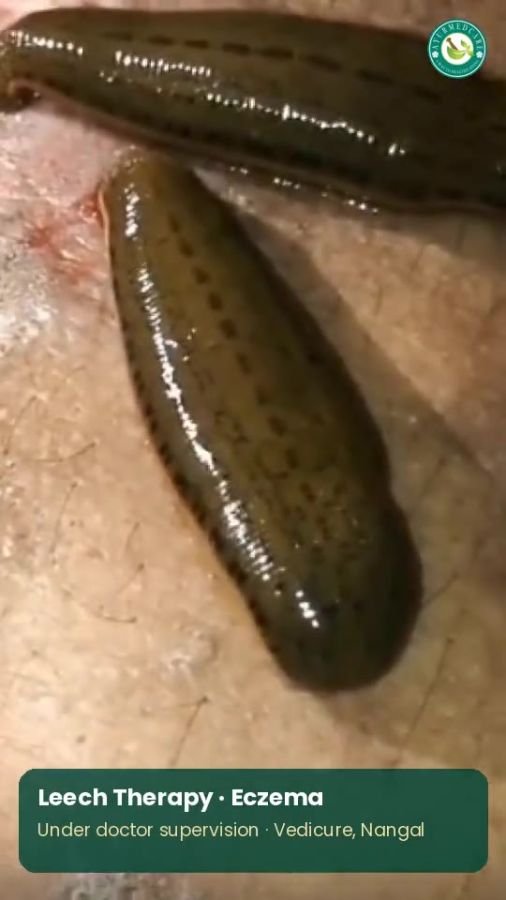
A Kapha-dominant type of Kushtha. Charaka describes it as itchy, dark eruptions with a lot of oozing. Incompatible food, excess curd, fish, sour and salty food, and day sleep are common causes.
Panchakarma we may advise
Cellulitis & erysipelas
VisarpaWhat it is & root cause
Charaka describes Visarpa as a fast-spreading inflammation of the skin from vitiated Pitta and Rakta, caused by excess salty, sour, pungent and hot food and curd. Bloodletting and cooling applications are the main local measures.
Panchakarma we may advise
Urticaria
SheetapittaWhat it is & root cause
Exposure to cold wind aggravates Kapha and Vata, which combine with Pitta and spread over the skin. Wheals appear like wasp stings, with itching and burning.
Panchakarma we may advise
Acne
Yuvan PidakaWhat it is & root cause
Sushruta describes eruptions on the face of young people, hard like the thorns of the Shalmali tree, due to Kapha, Vata and Rakta.
Panchakarma we may advise
Hair fall
KhalityaWhat it is & root cause
Pitta with Vata reaches the hair roots and makes the hair fall, while Kapha and Rakta block the roots so new hair does not grow. Charaka advises Nasya for hair fall and greying.
Panchakarma we may advise
Premature greying
PalityaWhat it is & root cause
Excess Pitta heat reaching the scalp, along with anger, grief and overexertion, turns the hair grey early.
Panchakarma we may advise
🫀Digestion & liver
Fatty liver
Yakrit VikaraWhat it is & root cause
The liver is the root of the blood channels and a seat of Pitta. Heavy, oily and sweet food, alcohol, day sleep and no exercise (the “over-nourishment” disorders of Charaka) build up Kapha and Meda (fat) and weaken digestion.
Panchakarma we may advise
Alcoholic liver disease
MadatyayaWhat it is & root cause
Charaka describes the harm of excessive and improper drinking: alcohol vitiates Rakta and Pitta and damages the liver and the mind. Stopping alcohol is the first step of treatment.
Panchakarma we may advise
Hyperacidity
AmlapittaWhat it is & root cause
Incompatible, stale, very sour and burning food and irregular meals make Pitta sour and sharp, giving heartburn, sour belching and nausea.
Panchakarma we may advise
IBS
GrahaniWhat it is & root cause
Grahani is the seat of the digestive fire (Agni). Irregular eating, fasting, overeating and incompatible food weaken Agni, giving alternating loose and hard stools with gas. Charaka praises buttermilk as the best diet in Grahani.
Panchakarma we may advise
Chronic constipation
VibandhaWhat it is & root cause
Apana Vata in the colon is aggravated by dry food, too little water and suppression of natural urges. Basti is the main treatment for Vata in the colon.
Panchakarma we may advise
Piles
ArshaWhat it is & root cause
Charaka links Arsha to weak digestion and constipation, along with long sitting on hard seats, riding and suppressing urges. Sushruta gives four lines of treatment: medicine, Kshara, Agnikarma and surgery.
Panchakarma we may advise
Fissure in ano
ParikartikaWhat it is & root cause
A cutting pain in the anus, mostly from passing hard stools, due to Vata and Pitta.
Panchakarma we may advise
🌸Women’s health
PCOD / PCOS
Artava DushtiWhat it is & root cause
Kapha and Vata, together with excess Meda (fat), block the channels of Artava (menstruation), giving irregular or delayed periods, weight gain, acne and difficulty in conceiving. Diet and lifestyle are as important as therapy.
Panchakarma we may advise
Painful periods
KashtartavaWhat it is & root cause
Apana Vata moves upward instead of downward, so the menstrual flow is obstructed and painful (Udavarta type in Charaka).
Panchakarma we may advise
Absent / scanty periods
NashtartavaWhat it is & root cause
Sushruta explains that Vata and Kapha cover the channels of Artava, so periods become scanty or stop.
Panchakarma we may advise
Heavy bleeding / DUB
RaktapradaraWhat it is & root cause
Charaka explains that excess salty, sour, hot and heavy food, curd, alcohol and day sleep increase Pitta and Rakta, giving heavy or prolonged bleeding.
Panchakarma we may advise
Female infertility
VandhyatvaWhat it is & root cause
Sushruta lists four essentials for conception: Ritu (the right time), Kshetra (a healthy uterus), Ambu (proper nourishment) and Bija (healthy ovum and sperm). A defect in any of these, or vitiated Vata, prevents conception. Both partners are cleansed and nourished.
Panchakarma we may advise
Leucorrhoea
Shweta PradaraWhat it is & root cause
A white discharge mainly due to Kapha, often with itching and weakness.
Panchakarma we may advise
Uterine & vaginal disorders
Yoni VyapadWhat it is & root cause
Charaka describes twenty disorders of the female reproductive system and says that the reproductive organs are never disturbed without Vata. So Vata-pacifying therapies are central.
Panchakarma we may advise
👨Men’s health
Male infertility
Shukra DushtiWhat it is & root cause
Charaka describes eight defects of Shukra (semen). Excess sexual activity, overexertion, stress, alcohol, dry or very salty food, heat and old age weaken Shukra.
Panchakarma we may advise
Low sperm count
Ksheena ShukraWhat it is & root cause
Depletion of Shukra dhatu from the same causes, with tiredness and low strength. Nourishing therapies are given after cleansing.
Panchakarma we may advise
Hormonal imbalance
What it is & root cause
Ayurveda sees hormonal imbalance as a disturbance of the tissue-level digestive fires (Dhatvagni) and of the doshas. Treatment is planned according to the person’s Prakriti.
Panchakarma we may advise
Weakness & fatigue
DaurbalyaWhat it is & root cause
Depletion of the body tissues (Dhatu kshaya) from illness, overwork, poor diet or stress.
Panchakarma we may advise
💧Kidney & urinary
Kidney / urinary stones
AshmariWhat it is & root cause
Sushruta explains that in people who do not undergo periodic cleansing and eat improperly, Kapha mixes with urine and dries into a stone, just as gallstones (gorochana) form in a cow’s bile. Large stones may need a surgeon.
Panchakarma we may advise
Painful urination
MutrakrichraWhat it is & root cause
Difficult and painful urination. Charaka lists heavy exercise, sharp medicines, dry alcohol, fast riding and eating before the last meal is digested as causes.
Panchakarma we may advise
Urinary obstruction & renal dysfunction
MutraghataWhat it is & root cause
Obstruction or reduced formation of urine, described in many types in the classics. Panchakarma is supportive and is given along with the treating physician for kidney disease.
Panchakarma we may advise
🌬️Breathing, nose & ENT
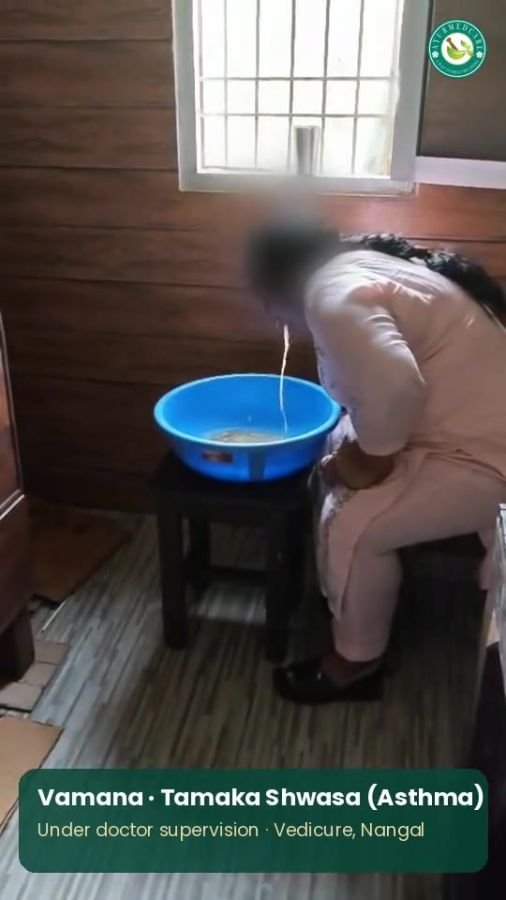
Bronchial asthma
Tamaka ShwasaWhat it is & root cause
Charaka explains that Shwasa starts in the stomach (the seat of Pitta), where Kapha and Vata block the airways. Dust, smoke, cold wind, cold water and heavy food trigger attacks. Charaka advises oiling and fomentation first, followed by Vamana or Virechana.
Panchakarma we may advise
COPD & emphysema
Shwasa RogaWhat it is & root cause
Long-standing breathlessness with cough. Cleansing is planned carefully according to the patient’s strength.
Panchakarma we may advise
Chronic cough
KasaWhat it is & root cause
Charaka describes five types of Kasa. Smoke, dust, cold and dry food aggravate Vata, and Kapha obstructs the throat and chest.
Panchakarma we may advise
Chronic sinusitis
PratishyayaWhat it is & root cause
Suppression of natural urges, dust, smoke, cold, day sleep, excess talking and crying vitiate the doshas in the head, giving blocked nose, discharge and heaviness of the head.
Panchakarma we may advise
Allergic rhinitis
Vataja PratishyayaWhat it is & root cause
Vata-type cold with repeated sneezing, watery discharge and dryness of the nose and throat, worse with dust and cold air.
Panchakarma we may advise
Ear problems
Karna RogaWhat it is & root cause
Vata in the ear causes pain, ringing (tinnitus) and dryness; Kapha causes blockage and discharge.
Panchakarma we may advise
👁️Eyes
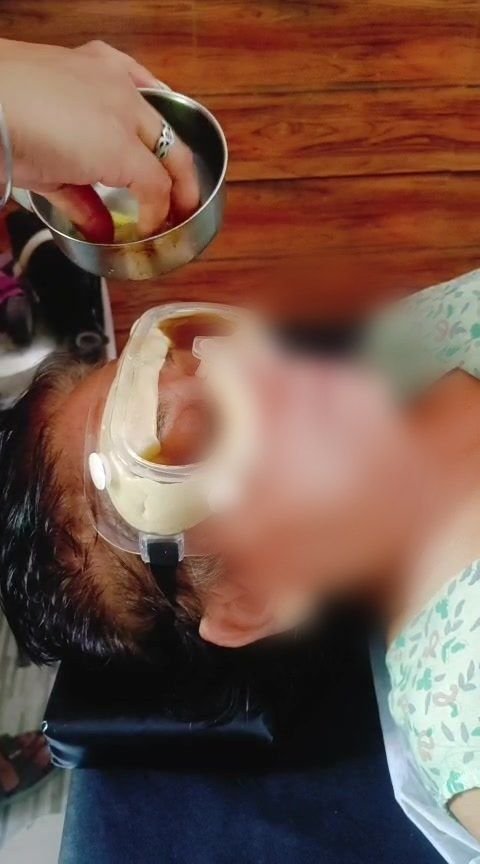
Refractive errors
Drishti DoshaWhat it is & root cause
The doshas affect the inner layers (Patala) of the eye. Looking at very small or very bright objects for long, irregular sleep, crying and smoke weaken the eyesight. Foot massage and oil on the head are advised in the classics to protect the eyes.
Panchakarma we may advise
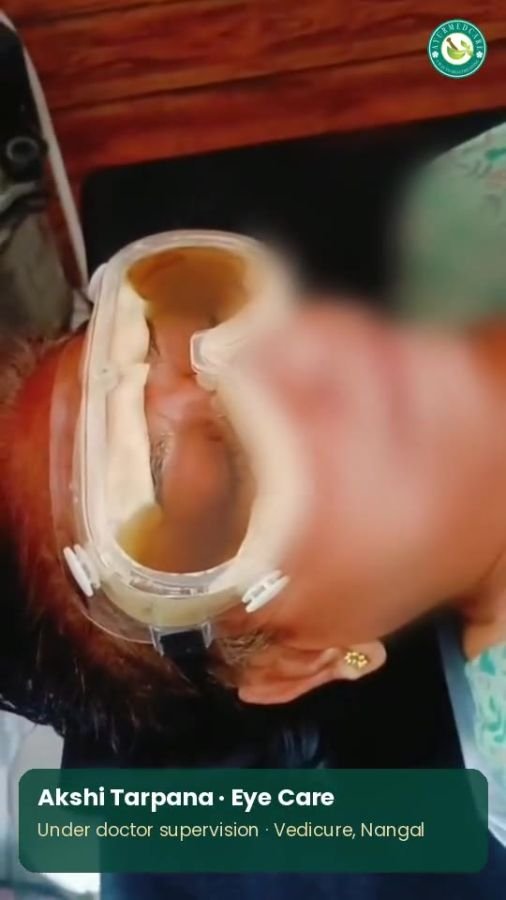
Dry eye syndrome
ShushkakshipakaWhat it is & root cause
Vata and Pitta dry up the eye, so the lids feel rough and heavy and the eyes burn and feel dry.
Panchakarma we may advise
Conjunctivitis
AbhishyandaWhat it is & root cause
Sushruta calls Abhishyanda the root of almost all eye diseases. There is redness, discharge, itching and watering according to the dosha involved.
Panchakarma we may advise
Computer vision syndrome
What it is & root cause
Long hours of looking at screens strain the eyes and aggravate Vata and Pitta, causing dryness, burning, headache and blurred vision.
Panchakarma we may advise
Night blindness
NaktandhyaWhat it is & root cause
A form of Timira where Kapha affects the third layer of the eye, so the person cannot see well at night.
Panchakarma we may advise
Retinitis pigmentosa
What it is & root cause
A degenerative eye disease. Ayurveda sees it as Vata with depletion of the eye tissues; Panchakarma is supportive to preserve sight, along with the eye specialist.
Panchakarma we may advise
Retinopathy & ARMD
What it is & root cause
Damage to the retina from diabetes, blood pressure or age. Panchakarma is supportive, along with the eye specialist.
Panchakarma we may advise
Blepharospasm
NimeshaWhat it is & root cause
Sushruta describes Nimesha, where Vata enters the nerves of the eyelid and makes the eye blink again and again.
Panchakarma we may advise
⚖️Metabolic & lifestyle
Diabetes
PramehaWhat it is & root cause
Charaka lists sitting idle, excess sleep, curd, new grains, jaggery products, excess milk and all Kapha-increasing food and habits as causes. A strong, heavy patient is cleansed; a lean, weak patient is nourished.
Panchakarma we may advise
Obesity
SthaulyaWhat it is & root cause
Charaka describes overeating, heavy, sweet, cold and oily food, no exercise, day sleep, a carefree mind and heredity as causes. Fat (Meda) builds up and blocks the channels, while appetite stays high.
Panchakarma we may advise
High cholesterol
MedorogaWhat it is & root cause
Weak digestive fire of the fat tissue (Medo-dhatvagni) lets Meda accumulate in the channels, from the same causes as obesity.
Panchakarma we may advise
Stress & anxiety
ChittodvegaWhat it is & root cause
Excess Rajas and Tamas in the mind, with aggravated Vata, from worry, overwork, grief and irregular routine.
Panchakarma we may advise
Seasonal detox
Ritu ShodhanaWhat it is & root cause
The classics advise cleansing in the season when a dosha naturally accumulates: Vamana in spring (Vasanta) for Kapha, Virechana in autumn (Sharad) for Pitta, and Basti in the rainy season (Varsha) for Vata.
Panchakarma we may advise
Rejuvenation
RasayanaWhat it is & root cause
Charaka says Rasayana works best after the body is cleansed, just as dye takes well only on a clean cloth. It aims at long life, memory, strength and immunity.
Panchakarma we may advise
🩸Circulation & wounds
Varicose veins
Siraja GranthiWhat it is & root cause
Sushruta explains that excessive walking or exertion in a weak person lets Vata squeeze and twist the veins, forming knotted swellings. Bloodletting with leeches is the main local measure.
Panchakarma we may advise
Non-healing wounds
Dushta VranaWhat it is & root cause
A chronic wound with discharge, bad smell and slow healing. Sushruta gives sixty measures for wounds, including cleaning, bloodletting, fumigation and applications.
Panchakarma we may advise
Cysts & swellings
GranthiWhat it is & root cause
Round, knotted swellings formed mainly by Kapha and Meda. Larger swellings may need surgery.
Panchakarma we may advise
Poor circulation in limbs
VataraktaWhat it is & root cause
In the CGHS guidelines, ischaemic limb is grouped under Vatarakta: Vata is obstructed and Rakta is vitiated, giving pain, numbness and discoloration of the limbs.